


Dr Duan Duoni
MDS Singapore (Orthodontics)




A parent brings their 7-year-old in, worried because the child’s teeth “look crooked” or the lower jaw seems to stick out a little.
The first question is almost always: “Do they need braces now?”
The honest answer is: probably not yet — but the right time to find out is now.
The American Association of Orthodontists recommends a first orthodontic assessment by age seven, not because most children need treatment at that age, but because a handful of conditions are genuinely time-sensitive.
Catching those early makes a real difference. Catching most others early makes very little difference at all — and I’ll try to be clear about which is which.
Orthodontic treatment is often described in 2 phases.
Phase I (also called early or interceptive orthodontics) happens while the child still has a mix of baby and adult teeth, typically between ages 7 and 11.
The goal is not to straighten teeth — that mostly comes later, in Phase II, when all the permanent teeth are in.
Phase I is about:
Not every child who benefits from Phase I avoids Phase II. Most still need comprehensive orthodontic treatment as a teenager.
What Phase I can do is make that Phase II shorter or simpler, and prevent problems that would be much harder — or in some cases impossible — to fix non-surgically once growth is complete.
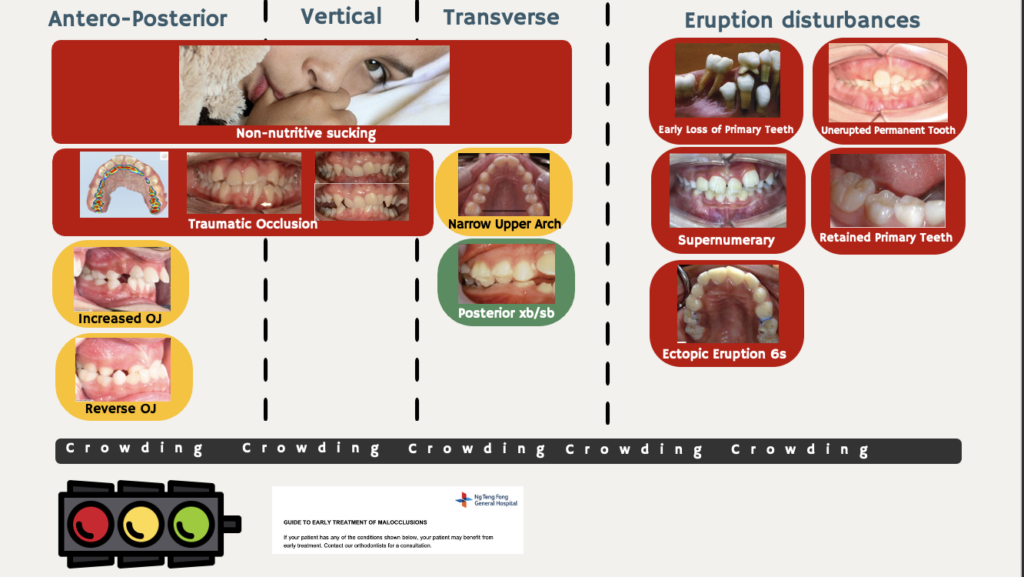
These are some situations where timing genuinely matters and where waiting until the permanent teeth are fully in would mean missing a window.
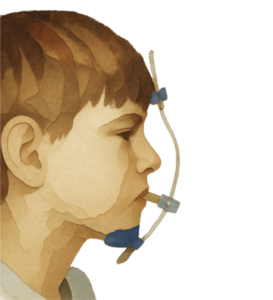
When the lower jaw grows forward relative to the upper, the most effective non-surgical treatment — a reverse-pull facemask — works best between ages 8 and 10, while the mid-face sutures are still responsive. Once growth accelerates in adolescence, the window for skeletal correction narrows significantly.
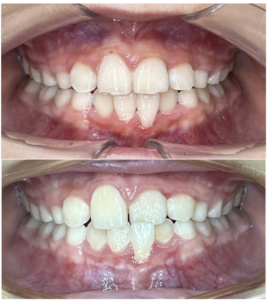
When a crossbite causes the lower jaw to shift forward every time the child closes, the jaw is being trained to bite in a position of compensation. Over time this can lead to potential trauma to teeth and gingival recession. This is one of the clearest indications for treating early — ideally as soon as it’s identified.
Very prominent upper front teeth — particularly an overjet >6–7mm — are associated with a substantially elevated risk of dental trauma. Research data quantifies this risk: children with an overjet >8mm have roughly 12 times the odds of traumatic dental injury compared to those with normal overjet. Reducing the protrusion early removes that risk.
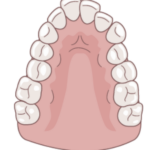
A narrow upper jaw that doesn’t match the width of the lower can cause crossbites, crowding, and breathing issues. Palatal expansion is most efficient when the mid-palatal suture is still growing — generally in younger children and early adolescents. Once the suture fuses (usually mid-to-late teens), expansion becomes far more difficult and treatment will become more invasive.
A persistent thumb-sucking or dummy habit can gradually create an open bite — where the front teeth don’t meet — and may contribute to a narrow, high-arched palate. If the habit stops early enough, the bite can self-correct. When it persists, a habit appliance can help break the pattern, and the research on tongue cribs for this purpose shows around 85–90% effectiveness. The key is that the habit must stop; the appliance alone doesn’t close the bite.
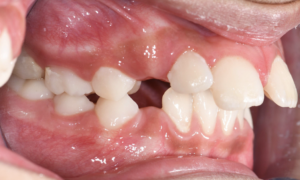
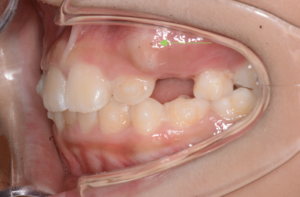
One thing I look for specifically around age 9–10 is whether the upper permanent canines are on track to erupt correctly. These teeth are the most commonly impacted in the upper arch, and there’s a useful clinical sign: at age 10, you should be able to feel the canine bulge under the gum on the cheek side of the jaw. If you can’t, it warrants an X-ray.
Why does this matter early? Because extracting the baby canine before age 11, if the permanent one is displaced toward the palate, normalises the position in around 64–91% of cases (Ericson and Kurol 1988) — depending on where it’s drifted. Leave it to chance and a palatally displaced canine may require surgical exposure and orthodontic traction to bring in, or in severe cases, extraction. Intervening early is genuinely simpler.
Not everything warrants Phase I treatment, and it’s worth being honest about that.
Mild-to-moderate crowding, for example, almost never benefits from early treatment.
For children with a mild overbite or Class II jaw relationship — where the upper jaw is ahead of the lower — the evidence from well-designed clinical trials (including a landmark study by Tulloch and colleagues in 2004) shows that early treatment produced significant skeletal changes, but by the end of Phase II, outcomes were equivalent to children who had only single-phase treatment. In other words: early treatment can help, but it may not change where you end up. There are specific situations — significant overjet with trauma risk, or a child experiencing psychosocial difficulties — where earlier treatment is clearly warranted regardless.
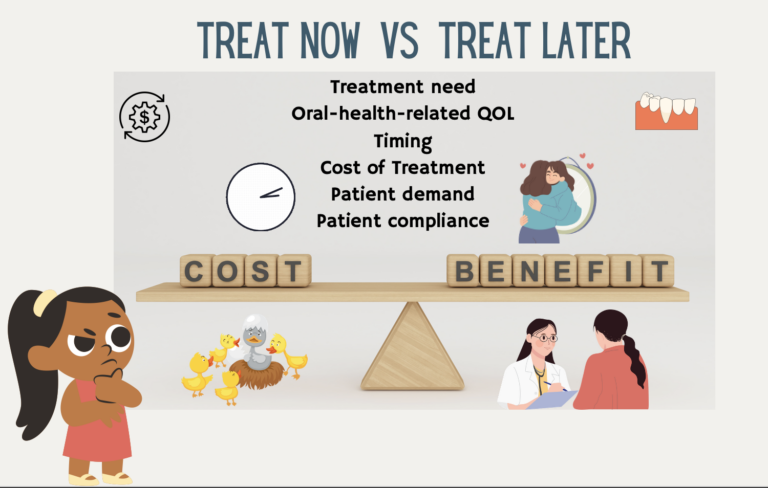
One legitimate concern with Phase I treatment is what’s sometimes called “burnout” — both for the child and the family. 2 phases of orthodontic treatment, each with its own retention period, can mean 5 or more years of orthodontic involvement from start to finish.
That’s not nothing. In cases where Phase I isn’t clearly indicated, it’s worth having an honest conversation about whether the benefit justifies the commitment, rather than treating because something can be treated.
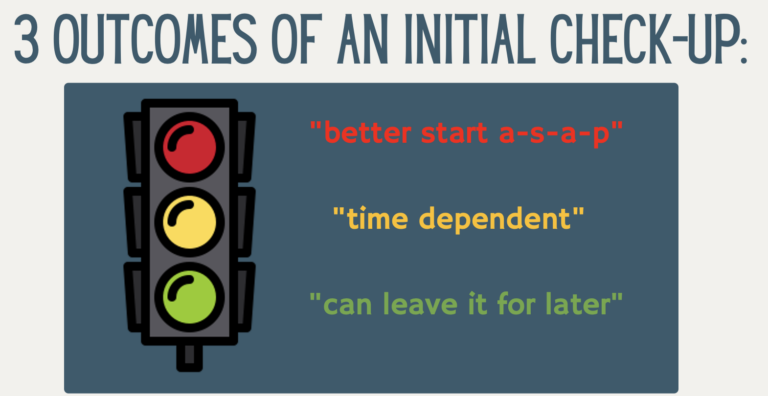
At a first orthodontic assessment for a child, I’m looking at jaw relationships, bite patterns, the sequence and timing of tooth eruption, any habits, and whether there are signs of a functional shift or tooth crowding serious enough to consider interceptive measures. Sometimes the answer is: nothing needs doing, come back in 12 months. That’s a good outcome — it means the growth is being monitored and nothing will be missed.
Orthodontics genuinely can’t fix everything early, and any practice that tells you otherwise is overselling it. But for the specific problems outlined above, the window of opportunity is real — and a check-up is a straightforward way to know whether your child is in that group.