





If you are currently undergoing orthodontic treatment — or considering it — you may have heard the term “dental monitoring” come up.
It sounds technical, but the concept is straightforward: dental monitoring uses smartphone technology and artificial intelligence (AI) to allow your orthodontist to track your treatment progress remotely, without you needing to visit the clinic for every check-up.
In this guide, we explain exactly what dental monitoring is, how the technology works, and what it means for your orthodontic journey.
1.What Is Dental Monitoring?
Dental monitoring is a remote patient monitoring system designed specifically for orthodontic care. T
he most widely used platform — DentalMonitoring (DM) — allows your orthodontist to review detailed scans of your teeth and track your progress between clinic visits using AI-powered analysis.
Rather than attending routine check-up appointments every 4-6 weeks, patients use a dedicated smartphone app to take guided scans of their teeth at home.
These scans are then automatically analysed by the system and reviewed by your orthodontist, who can determine whether your treatment is progressing as planned.
Dental monitoring is compatible with most orthodontic treatments, including:
- Clear aligner therapy (such as Invisalign)
- Fixed metal braces
- Ceramic braces
- Retainer monitoring (post-treatment)
2. How Does Dental Monitoring Work?
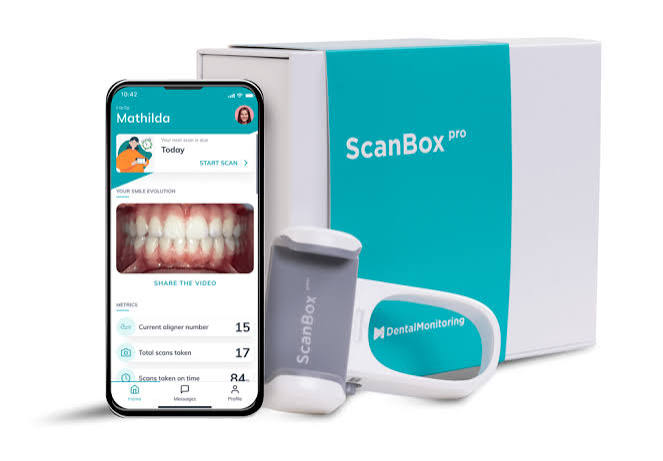
1. Download the App and Receive Your Scan Box
Once your orthodontist enrolls you in a dental monitoring programme, you will download the official app on your smartphone. You will also receive a small device called a ScanBox, which holds your phone at the correct angle and distance to capture accurate, consistent images of your teeth.
2. Take Your Weekly Scan
Using the ScanBox and the app, you follow on-screen prompts to photograph different sections of your teeth. The process typically takes fewer than 5 minutes and can be done from anywhere — at home, at work, or while travelling.
3. AI Analyses Your Scans
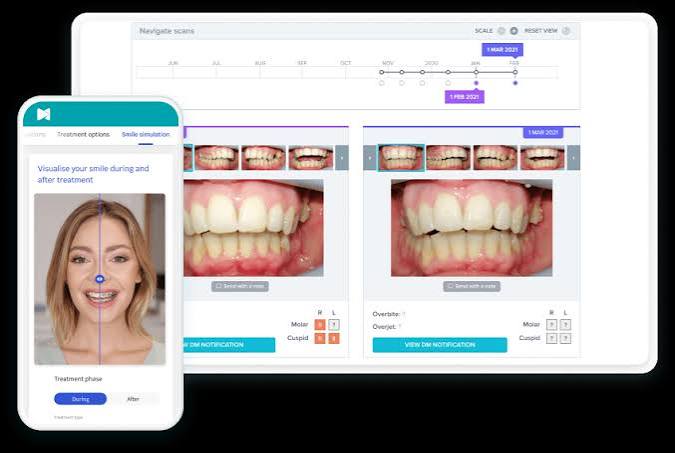
Once submitted, the scans are analysed by artificial intelligence that has been trained on millions of orthodontic images. The AI checks for key indicators such as aligner fit, tooth movement, gum health, and any potential concerns — and flags anything that requires your orthodontist’s attention.
4. Your Orthodontist Reviews and Responds
Your orthodontist reviews the AI analysis and your scans, then sends you a personalised message through the app. They might confirm that everything is on track, advise you to move to the next set of aligners, or ask you to come in for a clinic visit if something needs closer attention.
Why Is Dental Monitoring Becoming More Popular?
Dental monitoring has grown rapidly in popularity for several important reasons.
Fewer Unnecessary Clinic Visits Traditional orthodontic care involves regular in-person check-ups whether or not anything has changed. With dental monitoring, you only need to visit the clinic when your orthodontist identifies a genuine reason to see you in person. For many patients, this significantly reduces the number of appointments required over the course of treatment.
Faster Detection of Issues Because your orthodontist can review your progress weekly rather than monthly, any concerns — such as poor aligner seating, unexpected tooth movement, or gum irritation — are identified much earlier. Early detection leads to faster corrections and can help prevent treatment delays.
Greater Convenience Life is busy. Dental monitoring gives orthodontic patients the flexibility to manage their treatment around their schedule. Whether you are a working professional, a student, or a parent managing a full household, the ability to check in with your orthodontist from home is a meaningful convenience.
More Personalised Care Because your orthodontist has access to frequent, detailed updates about your teeth, they can make more informed decisions about your treatment plan. This level of oversight allows for a more personalised, responsive approach to your care.
FINAL THOUGHTS
Dental monitoring represents a significant step forward in how orthodontic care is delivered — putting more information in the hands of both patients and clinicians, and making treatment more efficient and convenient for everyone.
If you would like to find out more about dental monitoring or discuss whether it is right for your orthodontic treatment, contact our clinic today to schedule a consultation.