



If your orthodontist has recommended interproximal reduction (IPR), you may be wondering why a small amount of enamel needs to be removed from between your teeth. Is it safe? Will it damage your teeth? And what does the procedure actually involve? In this guide, we’ll explain what IPR is, why it may be recommended, and how it is performed safely during orthodontic treatment.
What Is Interproximal Reduction (IPR)?
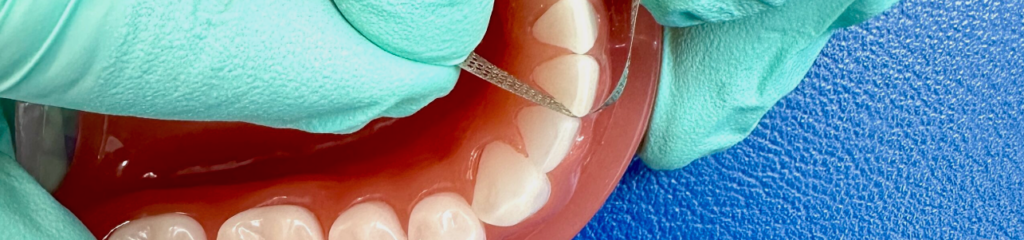
Interproximal Reduction (IPR) is a common orthodontic procedure that creates a small amount of space by gently polishing a tiny amount of enamel between selected teeth. This helps your teeth move into a better position during orthodontic treatment, including braces and Invisalign, and may reduce the need for tooth extractions in suitable cases.
Why do I need IPR?
IPR may be recommended to:
- Create space to straighten crowded or crooked teeth
- Improve the fit of your bite
- Reduce small “black triangles” between teeth, at the gum area
- Improve contact between teeth and reduce food traps
- Improve the shape, size, and symmetry of your teeth
How much IPR will I need?
Only a small amount of enamel is removed, usually no more than 0.5 mm per contact point. The exact amount is carefully planned and customised for each patient by our experienced orthodontic team.
Our clinicians often add other methods of creating space (such as arch expansion and distalisation) to reduce the amount of IPR needed.
Is IPR safe?
Yes. IPR is a safe and well-established orthodontic procedure. Only a very small amount of enamel is removed, and the amount is carefully planned for each patient.
Our clinicians at MyBracesClinic will move your crooked teeth into a more favorable position BEFORE starting IPR to ensure proper access to the area for a safe IPR procedure.
What happens during IPR?
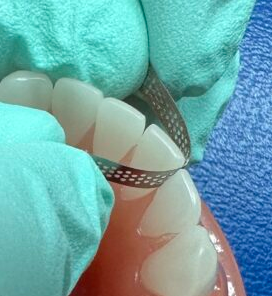
At MyBracesClinic, IPR is performed using specialised instruments to gently polish a small amount of enamel between selected teeth. The procedure is quick and comfortable, and local anaesthetic is usually not required. Most patients describe it as a gentle vibration and are surprised that it is such a fast procedure.
Our preference for instruments is fine, double/ single sided, perforated diamond strips, as this gives our clinicians better control over the amount, direction, and final contour for a more natural finish.
When is IPR not suitable?
IPR may not be recommended if:
- A large amount of space is required
- Your teeth have insufficient enamel
- Teeth are severely damaged or heavily restored
- Tooth extraction would provide a better treatment outcome
Is IPR Right for You?
IPR is not necessary for everyone, but it can be a useful part of orthodontic treatment when carefully planned. Your orthodontist will assess your teeth, available space and treatment goals before deciding if IPR is appropriate.
Not sure if IPR is right for you? There are alternatives to IPR that must be explored BEFORE embarking on IPR to create space.